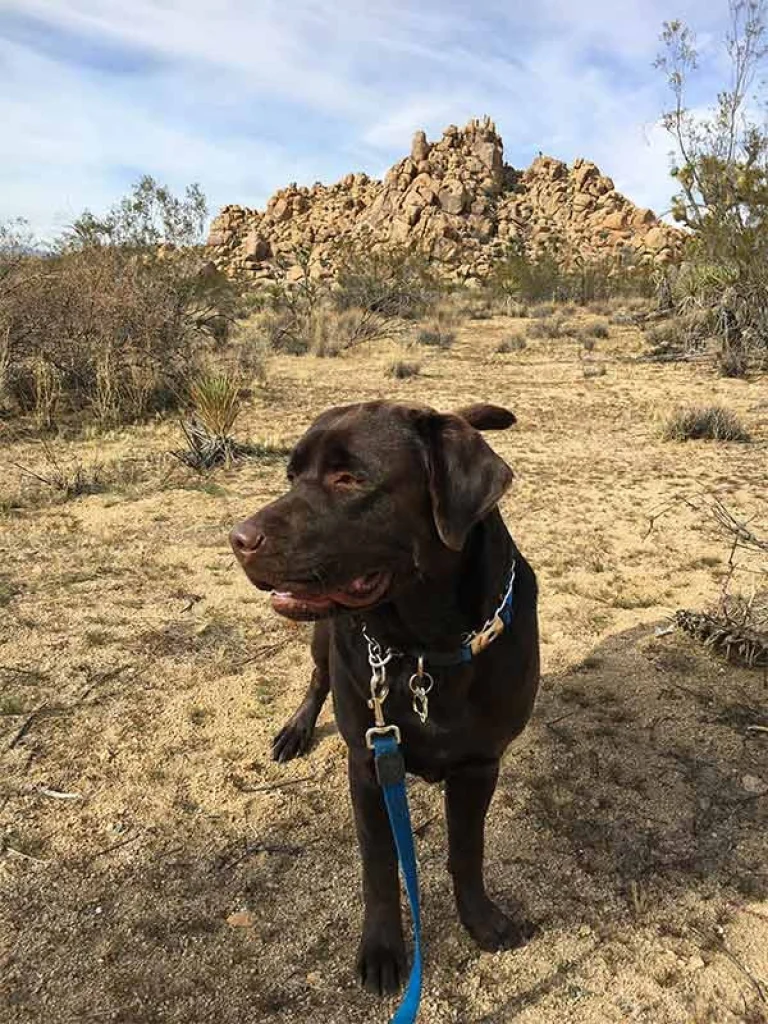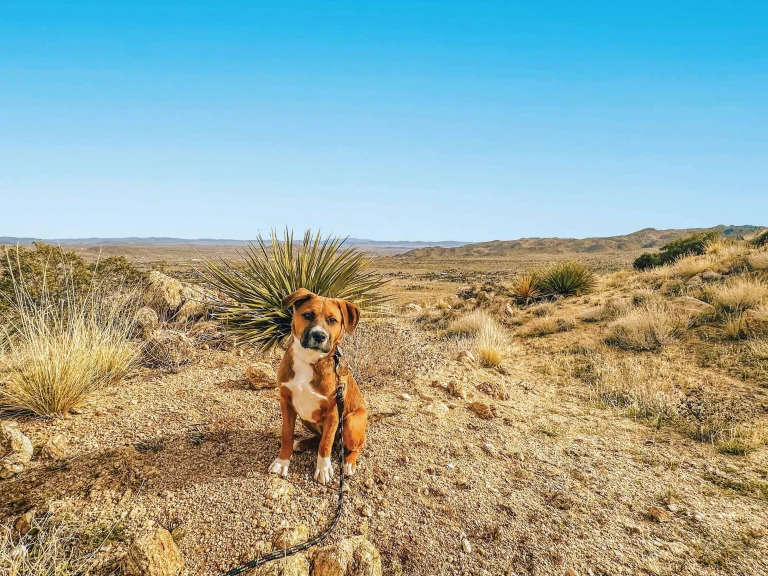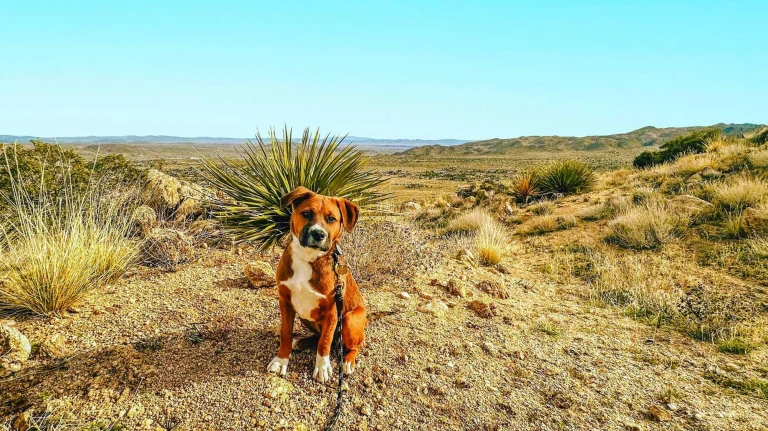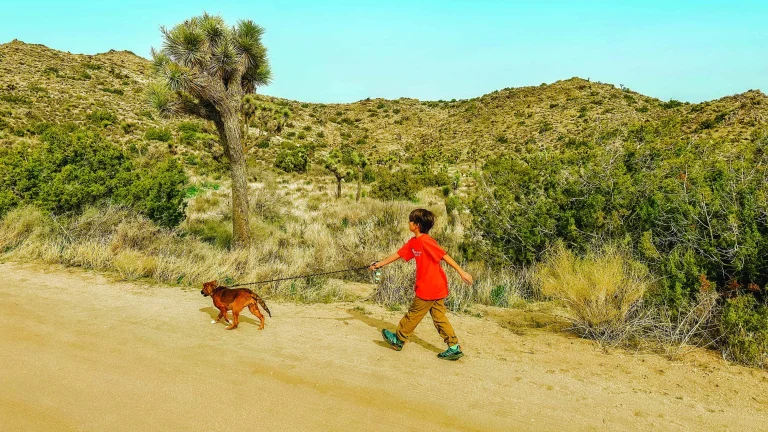
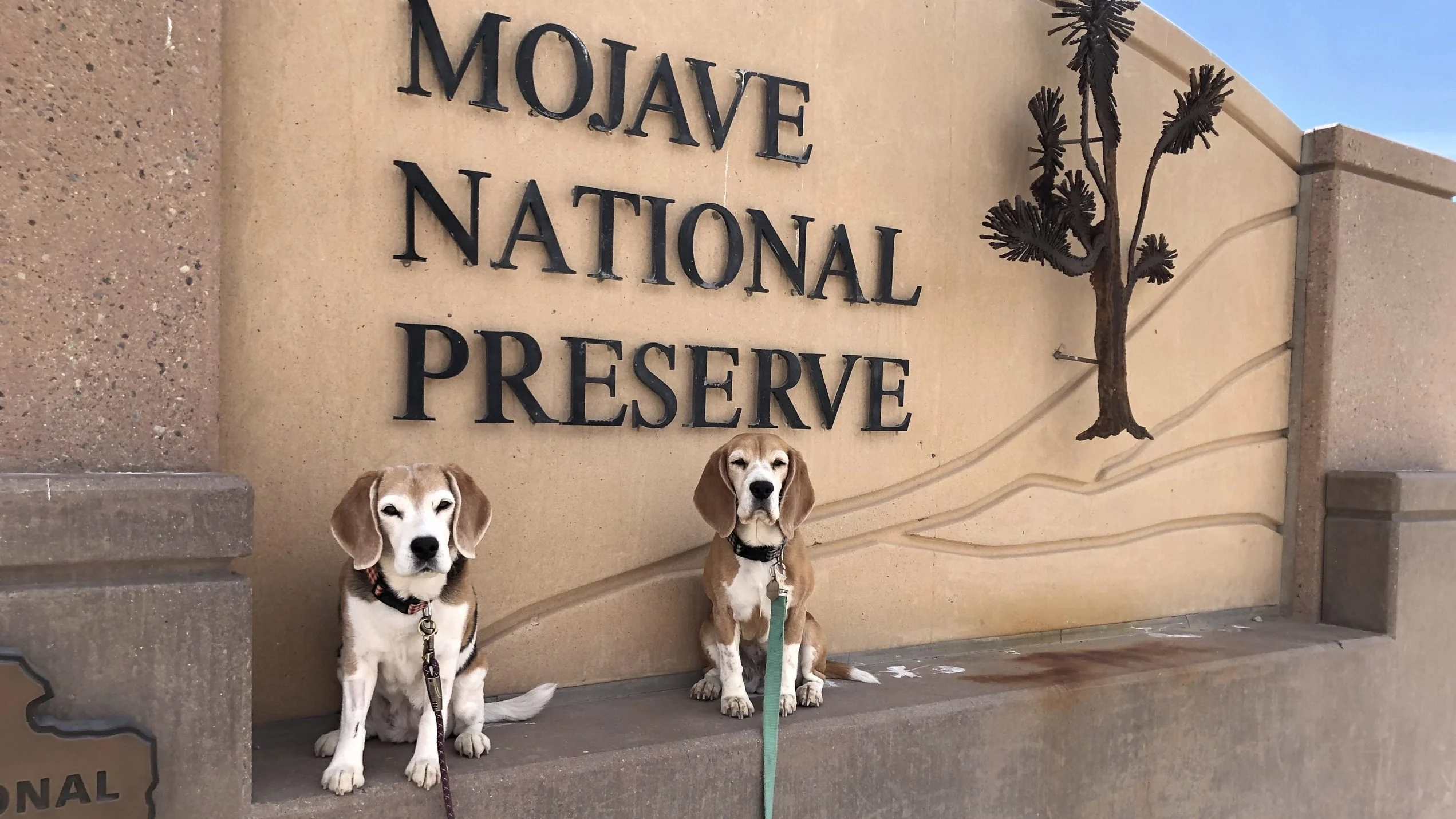
The name sounds intimidating, and the 1.6 million-acre Mojave National Preserve in San Bernardino County can certainly be that. But in winter, when T-shirt weather often prevails, it’s a delightful place to roam with your dog and take in rugged mountains, peaked cinder cones, seas of dunes, exotic plants and other sights. Dogs must be leashed (except when hunting)—a sensible idea considering the spines, thorns and snakes that are part of the rugged landscape. And there’s lots to see and experience, including the largest Joshua tree forests in the world in the Cima Dome and Shadow Valley areas.
The rose-hued Kelso Dunes, which cover 45 square miles, are a highlight, as is the ghost town of Kelso, where a defunct railroad station dating to 1905 has been spruced up to serve as a visitor center. Stop in to grab a map and get oriented before heading deeper into the preserve.
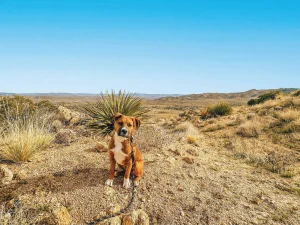
But the Mojave is no place for a casual Sunday drive in your Prius (no charging stations, for one thing). High-clearance vehicles are required to negotiate the hundreds of miles of dirt roads in the preserve. Many visitors make an adventure of it by driving the historic Mojave Road, a rough dirt track tracing a 147-mile line through the desert and accessing many natural features. Make sure your spare tire is in good shape and pack extra water—cell service is spotty at best out here.
Hiking opportunities are many, including the moderate, 3-mile out-and-back Teutonia Peak Trail near Baker, which takes in an impressive Joshua tree forest and provides far-reaching, panoramic views from the rocky summit. The Barber Peak Loop Trail, also rated moderate, is a 5.7-mile route that circles a peak characterized by strange rock formations and many stands of barrel cactus. Both dogs and people have fun at the Kelso Dunes, where a 2.7-mile trail provides a sandy and strenuous workout culminating with great views and the chance to climb up and run or slide down a dune (go in late afternoon or early evening to catch the low light that casts a pinkish glow over the landscape).
Keep in mind that the sand and rocky terrain can be tough on your dog’s paw pads, so consider bringing booties or a paw balm for protection. Carry a collapsible water bowl and offer your pup water frequently—dogs overheat faster than we do, and shade is scarce in the desert. For more on keeping your dog safe in hot conditions, check out our guide on how to protect your dog from heatstroke.
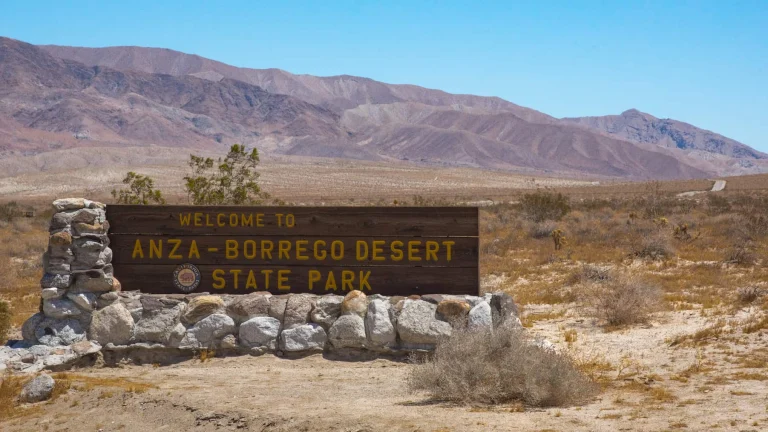
Needless to say, you’ll want to pick a cool day for hiking in the Mojave and bring lots and lots of water for you and your dog. January through March are the best months weather-wise, and also the time when wildflowers are in bloom. Insider tip: be careful with your camera and consider taking out your contact lenses when visiting the dunes, as blowing sand can ruin both. If you’re looking for more dog-friendly hikes in the Desert Region, check out our roundup of top dog-friendly adventures in the California deserts, or head to nearby Joshua Tree and Anza-Borrego for even more desert exploring.